1. Introduction
 |
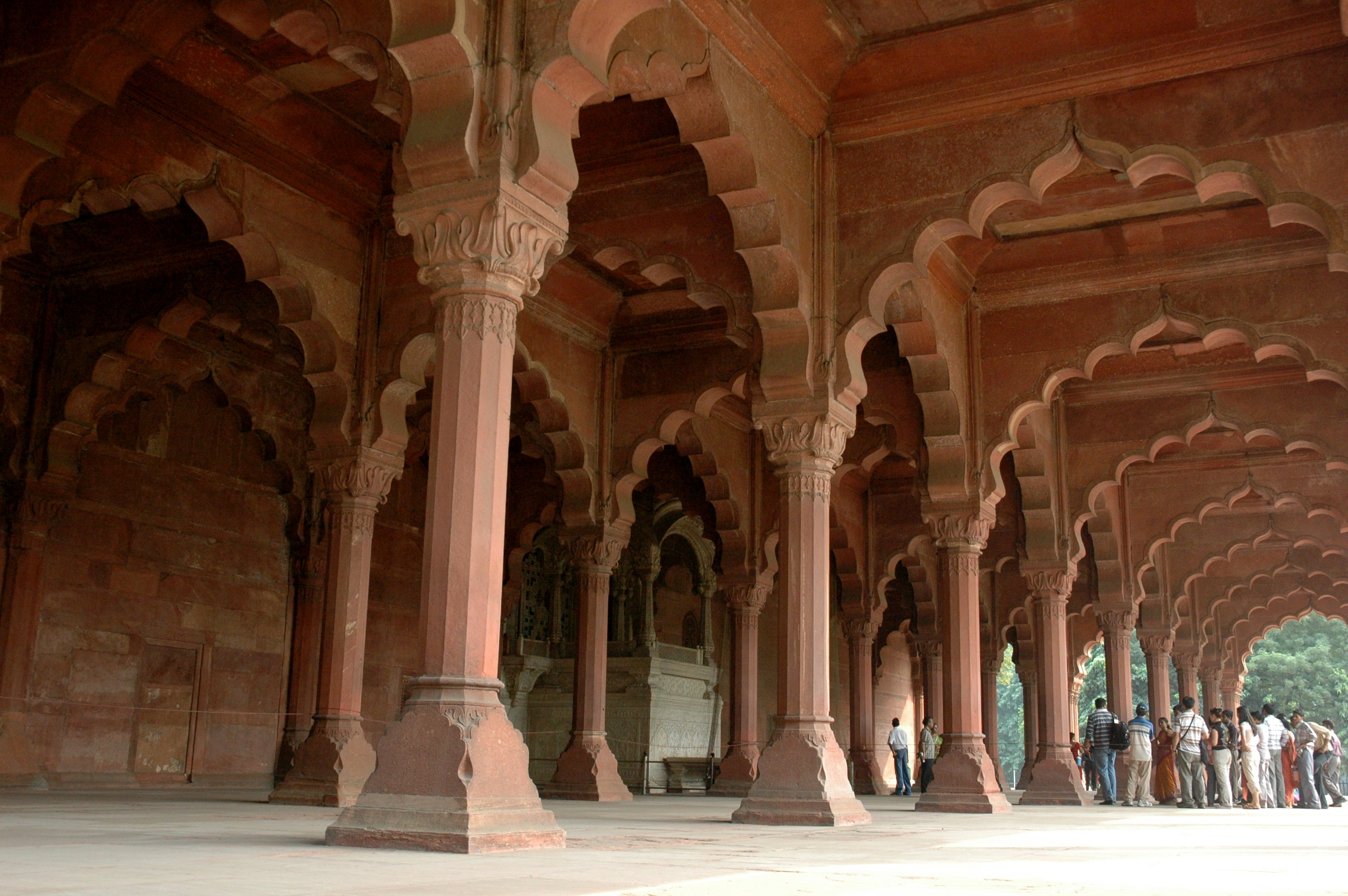
Jakub Hałun, CC BY-SA 4.0, via Wikimedia Commons Diwan-i-Khas |
The Red Fort, or Lal Qila, stands as the iconic crown jewel of Mughal architecture in Old Delhi, India. Built by Emperor Shah Jahan in the 17th century, this magnificent fortress served as the principal residence for Mughal emperors for nearly 200 years, embodying the zenith of their artistic and architectural achievements.
A UNESCO World Heritage Site since 2007, its massive red sandstone walls enclose a sprawling complex of palaces, halls, and gardens, showcasing a seamless fusion of Persian, Timurid, and Indian architectural styles. Today, it remains a potent symbol of imperial grandeur and modern national pride, proudly hosting India’s annual Independence Day address delivered by the Prime Minister from the ramparts of its historic Lahori Gate.
If any tourists need any help, here is the official website of the Government of India to guide the domestic and foreign tourists: India Tourism Development Corporation (ITDC)
2. Historical Overview
2.1 Origins & Construction
Commissioned in 1638 when Emperor Shah Jahan shifted his capital from Agra to Delhi, the Red Fort was completed in 1648. Built over 250 acres with walls of red sandstone stretching ~2.5 km, it embodies a rich fusion of Persian, Timurid, and Indian architectural styles.
2.2 Architect: Ustad Ahmad Lahori
The mastermind behind the Taj Mahal, Ustad Ahmad Lahori also designed the Red Fort. His design features cusped arches, pietra dura (stone inlay), jali screens, marble work, and symmetrical gardens, epitomizing Mughal aesthetics.
2.3 Later history & colonial impact
 |
Peacock Thorne attributed to Khairullah (active 1800–1815), Public domain, via Wikimedia Commons |
Following the 1857 revolt, the historic fort, a symbol of erstwhile grandeur and power, suffered immensely at the hands of the victorious British forces.
Their response was not merely to quell the rebellion but to systematically dismantle and desecrate the very heart of the Mughal dynasty. The fort, once a vibrant center of imperial life, was subjected to widespread looting and repurposing.
Sections were ruthlessly destroyed, forever altering its architectural integrity, while the opulent royal halls, once witness to centuries of courtly splendor and intricate political maneuverings, were ignominiously converted into barracks for British soldiers.
This transformation stripped the fort of its intrinsic character, turning a palatial residence into a mere functional military outpost. In 1739, Nadir Shah invaded Delhi, carting away the Peacock Throne and the jade wine cup of Shah Jahan. Among the most egregious thefts were the legendary Peacock Throne, a masterpiece of craftsmanship adorned with precious jewels, which was dismantled and its components dispersed.
 |
Koh-i-Noor Diamond AnonymousUnknown author, Public domain, via Wikimedia Commons |
Countless treasures, priceless artifacts, and irreplaceable works of art were either carried off as spoils of war or sold abroad to private collectors and institutions, their provenance often obscured.
Among the most egregious thefts were the legendary, the fabled Koh-i-Noor Diamond, a stone steeped in myth and history, which found its way into the British Crown Jewels; and numerous royal jewels and regalia, now prominently displayed in British institutions, serving as stark reminders of a colonial past. These acts of plunder not only deprived India of its cultural heritage but also symbolized the complete subjugation of a once-mighty empire. The scars of 1857, both physical and emotional, continue to resonate within the fort's ancient walls, speaking volumes about the profound impact of colonial conquest.
3. Architectural Highlights & Must‑See Sections
3.1 Lahori Gate & Chhatta Chowk
The Lahori Gate is the main ceremonial entrance facing Lahore. Its three-story façade with octagonal towers is clad in red sandstone with marble chhatris (pavilions). Beyond lies the Chhatta Chowk, an arched marketplace where nobles once shopped for luxury goods.
3.2 Delhi Gate
 |
Udit Kapoor, CC BY-SA 4.0, via Wikimedia Commons Delhi Gate |
3.3 Diwan‑i‑Aam (Hall of Public Audience)
This large rectangular hall (approx. 100 × 60 feet, supported by 27 bays of columns) was where the emperor met commoners and heard grievances. The marble canopy (jharokha) with Bengal‑style roof and inlaid pietra dura panels forms its focal point. The emperors sat there for the famed Jharokha Darshan ceremony.
3.4 Diwan‑i‑Khas (Hall of Private Audience)
|
Jakub Hałun, CC BY-SA 4.0, via Wikimedia Commons Diwan-i-Khas |
It originally housed the famed Peacock Throne, adorned with Koh‑i‑Noor and other gems.
A Florentine jeweller (Austin de Bordeaux) created the bird and floral pietra dura panels. Restorations by Lord Curzon and later artists revived some of its luster.
3.5 Rang Mahal & Khas Mahal
The Rang Mahal, or “Palace of Colors,” was part of the ladies’ quarters (zenana). Adorned with frescoes, mirrored ceilings, and internal water channels for cooling, it epitomizes Mughal luxury. Beneath ran the Nahr‑i‑Bihisht ("Stream of Paradise") through marble lotus basins.
The Khas Mahal served as the emperor’s private residence—featuring luxuriant marble screens depicting the scales of justice and water channels beneath, with carved lotus basins and tranquil floral motifs
3.6 Mumtaz Mahal & Archaeological Museum
 |
Nishant88dp, CC BY-SA 3.0, via Wikimedia Commons Mumtaz Mahal |
3.7 Moti Masjid, Hayat Bakhsh Bagh & Other Structures
Built by Aurangzeb in white marble, Moti Masjid ("Pearl Mosque") was for his personal prayer. The Hayat Bakhsh Bagh, or “life‑bestowing garden,” is a charbagh‑style garden with marble pavilions (Sawan and Bhadon). The Hammam features exquisite marble basins and mirror mosaic (ā’īnakārī), and the Shahi Burj served as the emperor’s study tower
4. Looting & Lost Treasures
A large part of the Red Fort’s wealth was plundered:
In 1739, Nadir Shah invaded Delhi, carting away the Peacock Throne, Koh‑i‑Noor diamond, and the jade wine cup of Shah Jahan.
After the 1857, British forces dismantled royal halls, confiscated carpets, thrones, and valuables, and transported many pieces to the British Museum, Victoria & Albert Museum, and British Library
Although India has repeatedly requested restitution of the Koh‑i‑Noor, the British government has refused. As a result, today’s Mumtaz Mahal museum displays only a fraction of Mughal-era artifacts.
5. Marble Sculpture & Decorative Artistry
Pietra Dura & Marble Inlay
Red Fort’s marble surfaces—especially in Diwan‑i‑Khas, Diwan‑i‑Aam canopy, Khas Mahal, Hammam—feature pietra dura or Parchīnkari: delicate inlay of semi‑precious stones (agate, carnelian, jade, pearls) forming floral and bird motifs. Originating from Italy, this technique was imported and perfected in Mughal India
Mirror Work (Āīnakārī) & Naqqāshi
Reflective mirror‑panel decoration featured prominently in the Hammam and river‑facing pavilions. The Naqqāshi technique incorporates colorful incised plasterwork, enhancing interiors with shimmering effects in light
Symbolic Scenes
In the Diwan‑i‑Am canopy’s back panel, pietra dura depicts Orpheus playing to animals, symbolizing just rule and harmony—reportedly looted and later returned under Lord Curzon’s orders
1. Lahori Gate – The Grand Entrance
The Lahori Gate was constructed between 1639–1648 by Emperor Shah Jahan, designed by Ustad Ahmad Lahori, also architect of the Taj Mahal. It serves as the ceremonial entrance and is built of deep red sandstone with octagonal towers and decorative chhatris.
2. Diwan‑i‑Am – Hall of Public Audience
 |
User: (WT-shared) Jpatokal at wts wikivoyage, CC BY-SA 4.0, via Wikimedia Commons Inside Diwan-I-Am |
Behind it, beautifully inlaid pietra dura panels depict flora, birds, and the iconic Orpheus motif, created by Florentine jewelers and looted after 1857, later returned by Lord Curzon.
3. Pietra Dura & Ornamental Marble Work
The close-up image highlights the Orpheus scene in the back wall of the Diwan‑i‑Am. This Renaissance-inspired inlay features semi-precious stones artfully arranged. Mughal artisans perfected the pietra dura technique, adopting and adapting Italian designs.
4. Khas Mahal – Emperor’s Private Palace
 |
© Vyacheslav Argenberg / http://www.vascoplanet.com/, CC BY 4.0, via Wikimedia Commons Khas Mahal |
Interspersed with this powerful emblem are delicate lotus motifs, representing purity and beauty, meticulously carved into the pristine marble. The entire panel is further adorned with exquisite lattice work, allowing for a play of light and shadow that would have subtly illuminated the royal chambers. Beneath this stunning display, a water channel once flowed, ingeniously designed to cool the space, demonstrating the advanced environmental control techniques employed during Shah Jahan's reign and adding to the serene ambiance of his personal sanctuary.
5. Additional Highlights Worth Exploring
Beyond these images, some notable sections within the fort (explained in full-length essay) include:
Delhi Gate: Built for military and staff use, once flanked by black marble elephants bearing statues of Jaimal and Patta. Kevin Standage+1
Chhatta Chowk (Meena Bazaar): A covered market intended for Mughal royalty with original painted alcoves. The Jerker+1
Rang Mahal, Mumtaz Mahal & Hammam: Exquisitely decorated pavilions, gardens, baths with rose-water fountains, and part of the zenana complex with flowing Nahr‑i‑Bihisht (Stream of Paradise). Kevin Standage+4https://dwello.in+4Tutorial At Home+4
Shahi Burj & Hayat Bakhsh Bagh: Emperor’s study tower overlooking seasonal pavilions Saawan and Bhadon amid a charbagh garden layout. Indian Ghumakkad+1
Salimgarh Fort: The older Sur-era fort that became encased within the Red Fort walls and is accessible on-site. Ruins and Remnants+2Kevin Standage+2
6. How to Reach the Red Fort
Metro: Take Delhi Metro’s Violet Line to Lal Qila station, then walk to the entrance via Chandni Chowk. Rickshaw/Uber/Ola: Available near Old Delhi; helpful if you’re exploring Chandni Chowk en route. Walking: From Chandni Chowk, it’s a short stroll through historic bazaars to the Lahori Gate. Metro: The nearest station is Lal Qila on Delhi’s Violet Line. A short walk brings you to the main entrance. Rickshaw, Taxi, Ola/Uber: Easily available in Old Delhi and around Chandni Chowk. Walking: From Chandni Chowk market, the Fort is within comfortable walking distance through narrow historic lanes.
Metro: Take Delhi Metro’s Violet Line to Lal Qila station, then walk to the entrance via Chandni Chowk. Rickshaw/Uber/Ola: Available near Old Delhi; helpful if you’re exploring Chandni Chowk en route. Walking: From Chandni Chowk, it’s a short stroll through historic bazaars to the Lahori Gate. Metro: The nearest station is Lal Qila on Delhi’s Violet Line. A short walk brings you to the main entrance. Rickshaw, Taxi, Ola/Uber: Easily available in Old Delhi and around Chandni Chowk. Walking: From Chandni Chowk market, the Fort is within comfortable walking distance through narrow historic lanes.
Ticket prices: Indian nationals pay approx ₹ 35; foreign visitors ₹ 550. Tickets can be bought online or onsite; skip‑the‑line options with tour guides are available.
Ticket prices: Indian nationals pay approx ₹ 35; foreign visitors ₹ 550. Tickets can be bought online or onsite; skip‑the‑line options with tour guides are available.
7. Local Cuisine & Surroundings

03Ani03, CC BY-SA 4.0,
via Wikimedia Commons
Indian Thali, Plate
Just outside in Chandni Chowk, enjoy Delhi’s iconic street food—parathas, kebabs, chole bhature, Mughlai biryani, refreshing lassi, and sweets like jalebi. Nearby is Jama Masjid, another architectural marvel and excellent viewpoint over Old Delhi. Markets brim with souvenirs, perfumes (ittar), embroidered wares, silver jewelry. You can very well enjoy the usual Indian Thali, also in many nearby hotels and restaurants.
And do not miss the tastes of Chole Bhature, a popular North Indian dish, which will be easily available nearby.
|
| 03Ani03, CC BY-SA 4.0, via Wikimedia Commons Indian Thali, Plate |
You can very well enjoy the usual Indian Thali, also in many nearby hotels and restaurants.
And do not miss the tastes of Chole Bhature, a popular North Indian dish, which will be easily available nearby.

Chole Bhature, a popular North Indian dish
পাপৰি বৰা, CC BY-SA 4.0, via Wikimedia Commons
পাপৰি বৰা, CC BY-SA 4.0, via Wikimedia Commons
8. Why These Images Matter
The first four images offer both external grandeur and interiors that reflect Mughal opulence.
The Lahori Gate reflects imperial power; the Diwan‑i‑Am and Khas Mahal show intricate decorative and symbolic artistry.
The pietra dura and mirror work represent Mughal synthesis of global techniques and luxury—captured beautifully in these visuals.
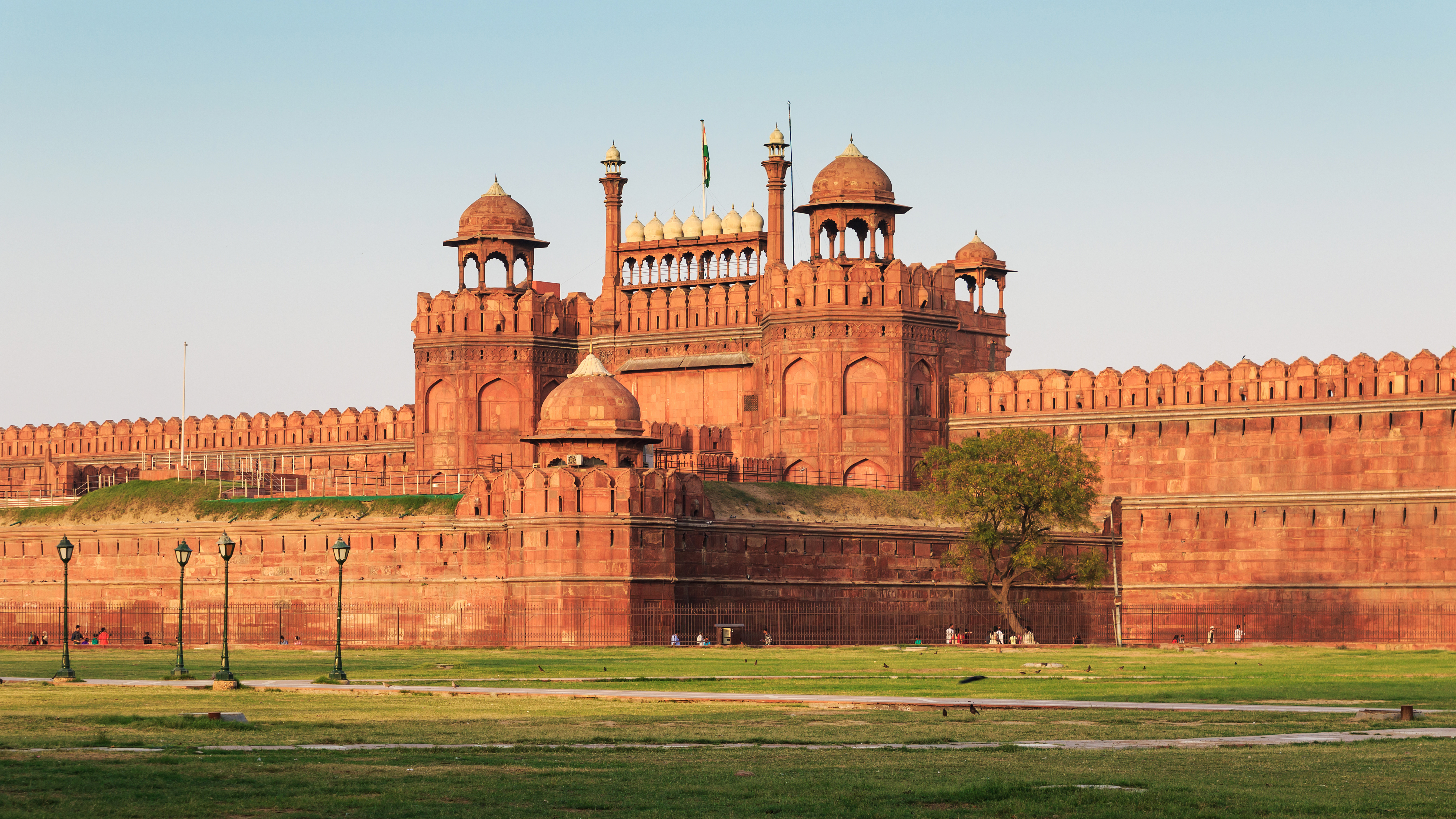
A.Savin, FAL, via Wikimedia Commons
RED FORT, NEW DELHI, INDIA
A.Savin, FAL, via Wikimedia Commons
RED FORT, NEW DELHI, INDIA
Significance Today & Conclusion
The Red Fort remains more than a palace—it is the symbol of India’s sovereignty. Every year on 15 August, the Prime Minister unfurls the national flag and addresses the nation from the ramparts of Lahori Gate.
Despite centuries of conflict and colonial misappropriation, the complex still offers a breathtaking journey through Mughal artistry:
Imperial halls echo with stories of power, justice, and ceremony
Gardens, watercourses, marble screens, and polished inlay embody supreme craftsmanship
The lost riches remind us of legacy, while the surviving monuments narrate resilience
Here are some of the important words used in this composition : Red Fort history, architecture, things to see, marble art, how to visit, Delhi street food, this essay covers each pillar with rich keywords and structured subheadings.